Menu

Rules

Table of Contents

Player Formats
How to Win
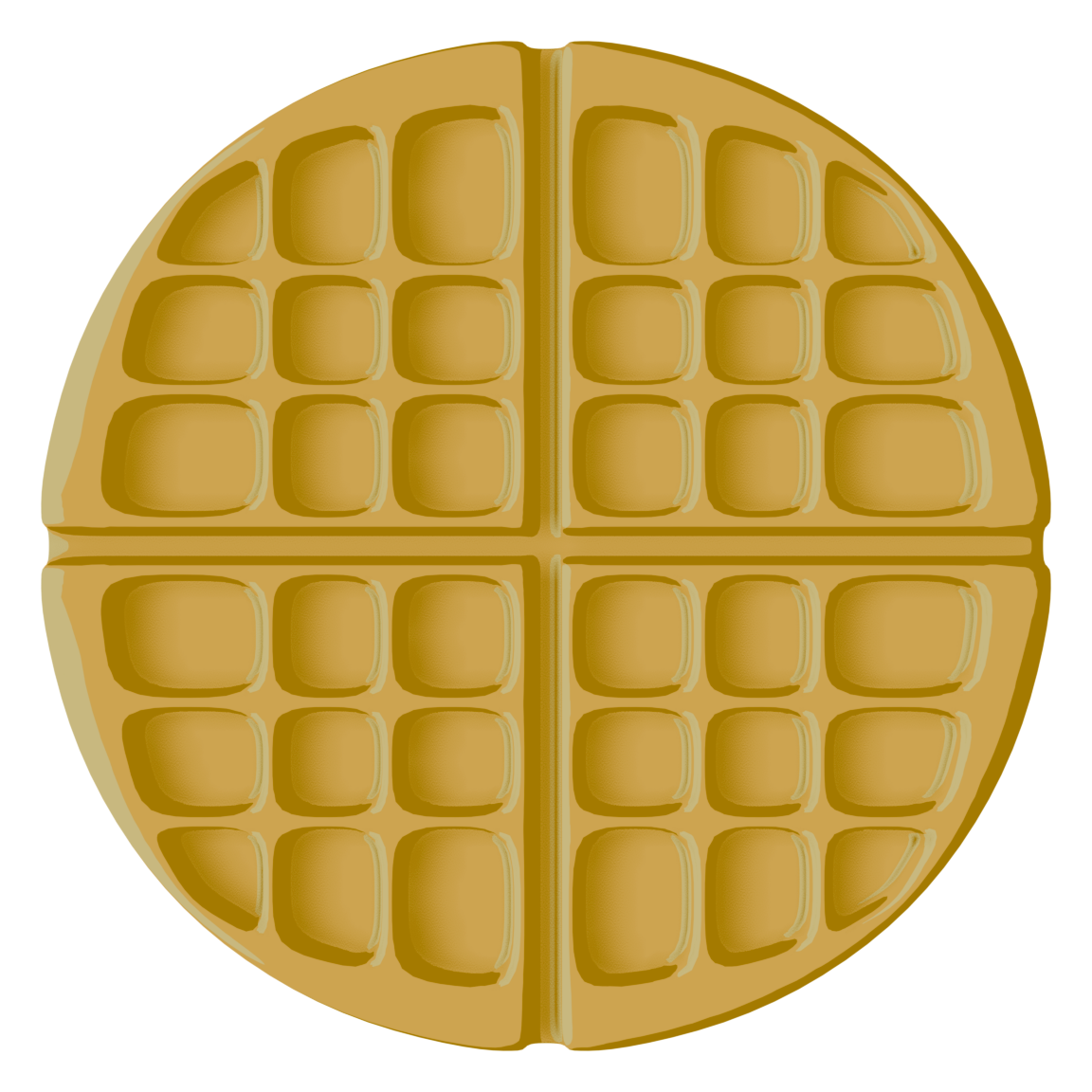
  1. Win 3/4 Quadrants: The 6x6 board is divided into 4 3x3 quadrants. To win one of the quadrants, you need a 3-in-a-row (straight or diagonal) or a 2x2 square. The 3-in-a-row or square must be within the quadrant to win it (not across quadrants). A quadrant win can be undone through jumping see “Jumping Mechanics” under Gameplay at any point in the game until a player has ¾ quadrants won. At that point, they instantly win the game.
  2. 5-in-a-row (Cross-Quadrant): This is an instant win condition. It can be diagonal or straight and can be across 2-3 quadrants. If you have a tri-quadrant 5-in-a-row, that is called a Saucy Fellow (because it is “mischievous and bold yet slightly disrespectful in a humorous way”). If you have a 6-in-a-row, it is called a SUPER-MEGA-FLEX Win (because you are flexing the fact that you won with a longer line than needed).
  3. Fill a Quadrant: Fill all 9 spaces in a quadrant with only your pieces. This may be challenging—impossible even—when your opponent has edge or corner pieces that cannot be jumped.
  4. Depletion: Capture all the opponent's pieces that they had available to play or jump, so they have no moves left to make. If they run out of pieces in their hand, they can still play if jumps are available, but when they run out of moves, they lose.
Gameplay Basics
Game Start: The game starts with an empty board. Strawberries place first: anywhere but the 4 corners of the overall board. After that, the players take turns placing in any open space (as long as it’s not in a locked quadrant)

Jumping Mechanics: As a turn, capture an opponent’s piece by moving 2 spaces in any direction into an open space in a straight or diagonal line over the opponent’s piece. This can be done across quadrants and regardless of quadrant locking (in fact, it is how to unlock quadrants or double lock). No double jumps (in a single turn) are allowed in normal rules.
Quadrant Locking
What Is a Locked Quadrant?: When a quadrant (one of the 4 3x3s) is won by a player How To Win, it is considered “locked” off from the other player(s) and “owned” by the player who has a win in it. The other player(s) to remember if there’s a 3-in-a-row or a square, then you can’t place in there. When the win condition(s) of the player who owns the quadrants are removed through jumping (capturing of pieces), the quadrant is reopened for play. If a person places in your locked quadrant by accident, simply hand them back their piece and remind them of the rules.

Civil War: If someone, by jumping, creates a win condition for themselves in a locked quadrant, owned by the opposing player, the quadrant is double locked and no one can place in it (as long as there is an equal amount of win conditions in the quadrant by each player—if a player has more win conditions they own the quadrant) The quadrant is double locked in a civil war until a jump from within or from a different quadrant causes there to be an unequal number of win conditions between the players.
Equity Rules
Strawberries go first, so they are a step ahead. To give blueberries an equal chance at winning, these are the nerfs and buffs: strawberries cannot go in one of the 4 corners of the overall 6x6 board on the first move. If strawberries win, blueberries have an extra move, only if it is a placement that causes there to be a win condition for them. When blueberries create their win condition, a world war begins, and it ends when a win condition is created, enhanced, or eliminated, and there is no longer a tie. An enhanced win condition involves more pieces than another and therefore wins the war; Super-mega-flex win beats a 5-in-a-row, and a filled quadrant and a 3-quadrant-owned win both beat the super-mega-flex win but tie with each other. Also, a depletion win beats all the others because it involves all the other players’ pieces.
Fun Terms
Waffling: When a player fails to make up their mind, the other player can call “waffling” on them. It does nothing, but it is fun to do and may annoy them.

Soggy Waffle: A player gets distracted, and the waffle gets soggy from sitting around. Feel free to yell “Soggy Waffle” to get their attention.

SUPER-MEGA-FLEX WIN: getting a 6 in a row win (you only need 5)

Civil War: double locked quadrant see Quadrant Locking and Owning

Arms Race: 1 player owns 2 quadrants next to each other (not diagonal), can place in these quadrants to get a 5 in a row, and the opponent cannot defend against it (because of the quadrant-owning rules). To continue the game, they must go on the offensive and put the other player on the defensive.

Single quadrant arms races also can happen when a player has filled enough of a quadrant and can block in a way where the opponent can't defend against a quadrant fill. In this scenario as well, the opponent must also play offensively.

Cold War: Both players are engaged in an arms race of their own at the same time (as described above).

Wall of Jericho: The Wall of Jericho is a move coined by a player named Joshua in which a player creates a win condition that the other player must block. However, the offensive player has a piece positioned so that it can jump the blocker back and forth every time it is placed. In this scenario, the losing player can essentially surrender by placing somewhere else, or they can keep sacrificing pieces as blockers until they lose from depletion.

World War: Both players have a game-winning condition See How to Win See Equity Rules

Invasion: Jumping into a quadrant and eliminating the opponent’s win in that quadrant in 1 jump

Revolution: Taking out an opponent’s win (by a jump) from within their quadrant.

Coup (Coup D’état): When a player jumps in a way that eliminates the opponent’s win in a quadrant and creates one for them.

Mutiny: A classic blunder—jumping with a blocker and giving the opponent the win. Your defensive man CANNOT leave his post, or you lose, but he disobeys orders and sells the war.

Special Modes
Double jumping mode : (2+ jumps allowed, like in checkers).

Self-jumping mode: (and you take your piece back when you jump it).

Slide down the river: (If you place a piece in a space next to the quadrant divider, then, as a move, you can slide across the divider in one direction to the furthest available space in any direction on either side of the divider (but still touching the divider). To be clear, if one side of the divider has more pieces than the other side, you can still go on that side; it just has to be the furthest spot on that side. As you do this, you must slide your piece across the divider (slide down the river). You can do this if a space is open, even if the quadrant you enter is locked.

*You can allow one of the players to do some of these modes to help them if they are less experienced, to make the game more balanced. When playing with equally matched opponents, however, you can both get the special abilities you agree upon (and this can add an extra layer of strategy to the game)*
Arcade Mode
(Online only) A mode with power-ups that players can activate, which gives them the ability to make otherwise impossible moves. Each power-up only lasts 1 turn, and a player can use up to 10 per game.

Below is a list of the power-ups:
Bonus Games
Snake: Starting with an empty board, 2 players take turns placing pieces. On the first move, they can place anywhere, but for the rest of the game, their next move must be in an adjacent space (straight or diagonal). The first player to run out of open spaces to place in loses, and the other player wins. The mini game is called “Snake” because it is very similar to the game where a snake grows as it eats apples and attempts to survive without running into anything.

Waffle Checkers: The (2-player) game begins with 2 rows of 6 pieces on opposite sides of the waffle (with 2 rows of empty pieces in between). The players take turns moving 1 space in any direction, straight or diagonal. They can do jumping the same as checkers or Waffle Wars (but it is not “must jump”). Also, double+ jumps are allowed. To win, you must make it to the other side of the waffle, reaching the line of spaces that the opponent’s back row started in (like how a piece becomes a king in normal checkers).

Hostage Rescue/Capture the Flag: (Die required, die not included) The (2-player) game begins with the waffle positioned diagonally, with a corner facing both players. In each play’s corner is a “hostage,” which is just an opponent’s piece that cannot be moved. Positioned in front of each hostage are 9 in 3 diagonal rows. (The first row has 2, then the next has 3, and the last has 4) Players will take turns rolling a die and moving straight the number of spaces indicated on the die (on the grid, diagonally compared to how the board is positioned). They can move over their own pieces, but not their opponent’s pieces. Also, since the longest possible move is 5, if the die rolls a 6, the player can split the movement between 2 different pieces. This also applies to any other time when moving straight in a direction, a certain number of spaces is not possible due to blocking. However, if a move is possible, they cannot split the movement between two pieces. Also, if you land in the same space as an opponent’s piece, their piece is eliminated. If you land in the same space as their hostage (your piece), then you win. Alternatively, you can play a version where you must take the hostage back to your corner, but that works better with a different object being the hostage, or in this case, the “flag.”

Connect-4: (Not an original to the waffle board, but it is possible.) Just agree on one side to be the bottom. Also, this is a slightly smaller board than normal Connect-4.

Reversi/Othello: (Not an original to the waffle board, but it is possible.) Smaller than a normal board for this game, and it may be a pain to replace pieces manually (because these pieces don’t flip to a different color).